
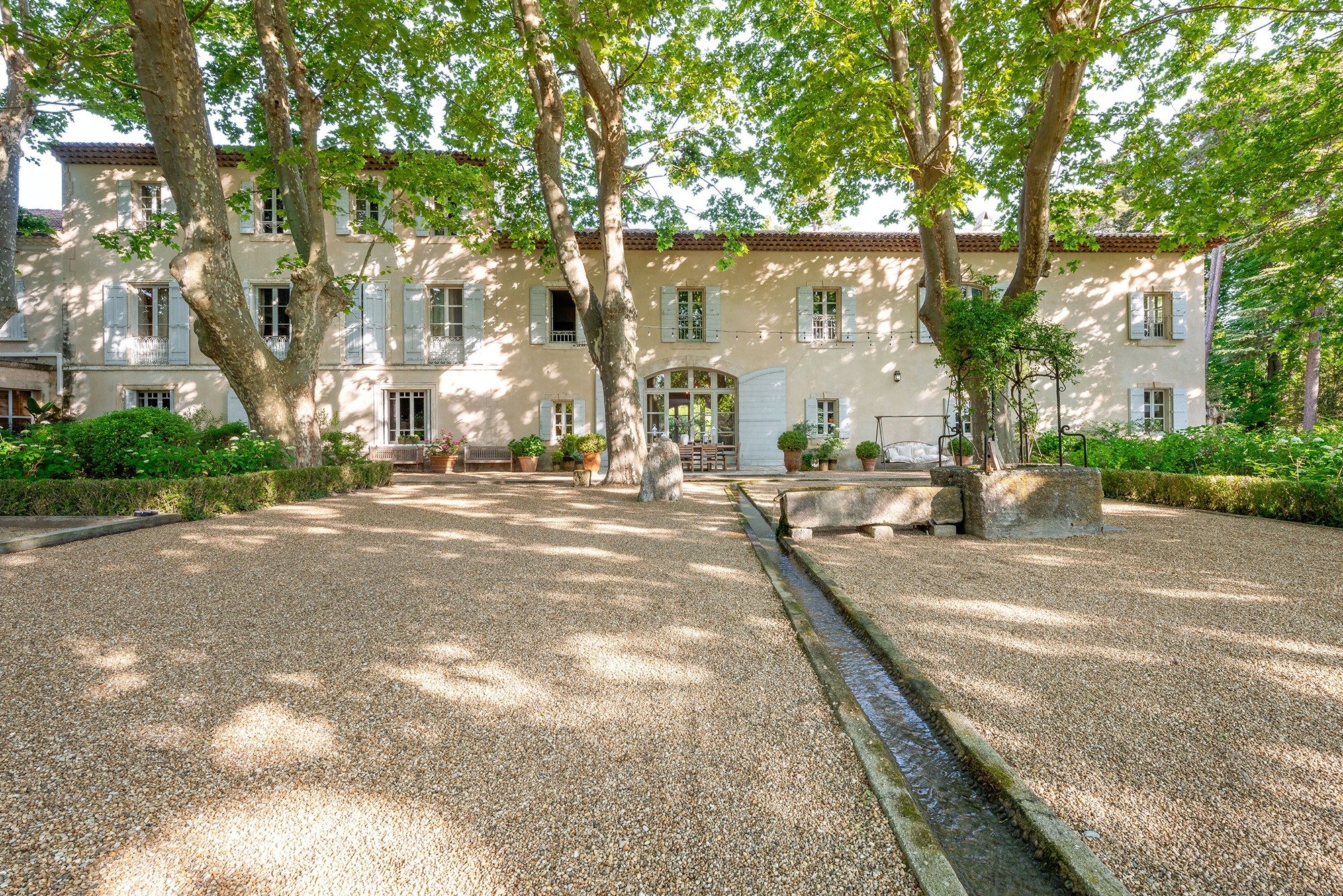
Here is the thing nobody tells you about taking a holiday with three other families: it is easier than going on your own.
Not more fun — though it is. Easier. A four-year-old who has another four-year-old does not need you. They vanish into the pool at ten and surface at one, wrinkled and starving. Somebody's mother offers to take the babies for an hour because she genuinely wants to. Two people cook, four people drink wine, and the whole thing runs on a kind of shared momentum that a family of four on its own never generates.
Meanwhile you, personally, get a morning off. Somebody's watching the little ones and nobody had to arrange it.
The catch is that this only happens if the house is right. Get the property wrong and you get eleven people in a beautiful building trying politely not to be in each other's way. So most of the work is in the choosing, and it happens months before anyone arrives.
Start with bedroom math, not with photographs
Every villa listing leads with the pool. The pool is not the problem. Sleeping arrangements are the problem, and they're what determine whether people are still enjoying themselves on day five.
What to work out before you look at a single photograph:
- How many separate sleeping zones do you need? Not bedrooms — zones. A couple with a baby needs a room where the cot isn't at the foot of their bed. Grandparents need to be far enough from the children's wing to sleep through a 5am wake-up.
- How many real bathrooms? The single most common source of low-grade group friction. Count en-suites, not bathrooms.
- Is there more than one sitting room? Critical and almost always overlooked. There must be somewhere for the adults to be at nine at night that isn't the room where a toddler is asleep — and somewhere for teenagers to be that isn't with the adults.
- Where does the baby monitor reach? Sounds trivial. It decides whether the parents of the youngest child spend their evenings with everyone else or upstairs alone.
- Is the pool fenced or unfenced? With children under four, an unfenced pool means an adult is always on duty, and "always on duty" is the opposite of a holiday.
This is why the villa market has shifted the way it has. The properties in demand now are the larger estates with separated wings and self-contained annexes — the layouts that let three generations coexist without anyone tiptoeing. Groups of ten to sixteen, staying ten to fourteen nights, booking six to eight months ahead, are the bookings the best houses are built around.
Large villas are a small, fixed supply, and the good ones are rebooked by the same families year after year. For a European summer, six to eight months ahead is the working minimum and the very best houses go earlier than that. If you're thinking about next August, the time to decide is now — not in the spring, when what's left is what nobody wanted.
The one conversation to have before you book
Money. Have it early, have it once, and have it in a way that doesn't require anyone to be brave.
The failure mode is dividing the total by the number of adults. Villa bedrooms are wildly unequal — one couple gets a suite with a terrace, another gets a twin under the eaves with the bathroom across the hall — and if everyone pays the same, someone spends the week quietly keeping score.
Price the rooms instead. Assign each bedroom a share of the total based on what it actually is, circulate the list, and let people choose. It converts an awkward negotiation into a simple menu, and it means the family who'd rather save money has an honest way to do that without feeling like the poor relations.
The same logic applies to food. Agree in advance what's shared (breakfast, the chef nights, wine) and what isn't (the day someone drives to the coast for lunch). A single shared kitty, topped up once, beats seven Venmo requests on the flight home.
This, incidentally, is a large part of what I do for group trips. Not because the arithmetic is difficult, but because the conversation is much easier when it comes from the person planning the trip than from a friend.
Staff are what make it a holiday instead of a house-share
The gap between a villa week that's lovely and one people talk about for years is almost entirely staff, and it's cheaper at scale than anyone expects.
A private chef for two or three nights of the week. For twelve people, the per-head cost frequently lands below what the same group would spend at a decent restaurant, and nobody has to drive, book, or wrangle a toddler through a two-hour dinner. It also solves the single hardest logistical problem of group travel, which is getting fourteen people fed at the same time without someone spending their holiday cooking.
A nanny for part of the week — shared across families, so the cost splits three or four ways and becomes almost incidental. This is the thing that buys the adults an actual evening out, all of them, together, which is usually the night everyone remembers.
Daily housekeeping. Unromantic, and the difference between a house that feels like a hotel by Wednesday and one that feels like a chore rota.
Split the days, share the nights. Mornings and afternoons go their own way — some people to the beach, some on a hike, the grandparents to a town and a long lunch, the little ones in the pool. Then everyone comes back for one long table at night. Groups that try to do everything together fray by Wednesday. Groups that never do anything together might as well have taken separate holidays.
Where this works best in Europe
Countryside beats coastline for groups, which surprises people. A villa in the hills with a pool and a view gives you a house that carries the week on its own, and the towns are a drive away when you want them. A beach villa means everyone is in the car by ten and back at four, and the house is just where you sleep.
Tuscany and Umbria remain the safest choice for a first group trip and for multigenerational groups specifically: the pace is slow, the houses are large and properly converted, the food is uncomplicated enough for children and good enough for adults, and there is enough within an hour's drive to keep a range of ages and energy levels occupied.
Provence and the South of France for groups with older children and a bigger appetite for restaurants and markets.
Ireland and the UK countryside for shorter flights, no time-zone adjustment for babies, and houses with real character — my own favorite, and consistently underrated for July and August when the Mediterranean is at its hottest and the children are at their most miserable.
The Alps in summer — the most underused idea on this list. A chalet that costs a fortune in February is remarkable value in July, with cool nights, easy hiking, and pools with a view of the mountains.
Houses I've booked and would book again
Name 3–5 properties with the details that prove you know them: how many it sleeps, the layout feature that makes it work for a group, whether there's a chef and what the nanny arrangement was. Photographs from your own stays will do more here than any copy I can write.
Common questions
How far ahead should we book?
Six to eight months for a European summer, and more for the best houses. Large villas are a small, fixed supply and are heavily rebooked by returning groups.
Is a villa actually cheaper than hotel rooms?
Usually, once you're past two families. One villa replaces four or five hotel rooms, and eating in for several nights cuts the food budget sharply. A private chef for twelve often costs less per head than the restaurant equivalent.
How do we split the cost without it getting awkward?
Price the bedrooms rather than dividing by adults, circulate the list, and let people choose. Agree it before booking. It turns a difficult conversation into a menu.
What if the group has very different budgets?
Room pricing handles most of it. Beyond that, keep the shared costs to the things everyone genuinely values — the house, two chef nights, the nanny — and leave the rest optional.
What size group is ideal?
Three to four families, or two families plus grandparents — roughly ten to sixteen people. Below that you lose the effect where the children entertain each other. Above it, you need a professional to run the logistics, and honestly, you need one anyway.

Brittany ColeTravel concierge with Scott & Thomas, Virtuoso member, and a mother of two under three. She plans multigenerational and multi-family villa trips, European travel, and ski weeks — and handles the coordination across households so nobody has to be the group's travel agent. More about Brittany →
Tell me what you're planning
Pick whatever applies. I'll send what's useful and nothing else — no weekly emails about nothing.
Thinking about a trip with friends?
The hardest part isn't the planning. It's finding out who's actually in. Send me your friends' names and I'll do the asking — who's interested, which weeks work, what everyone has in mind — and come back to you with one clear picture instead of a group chat that dies in March.